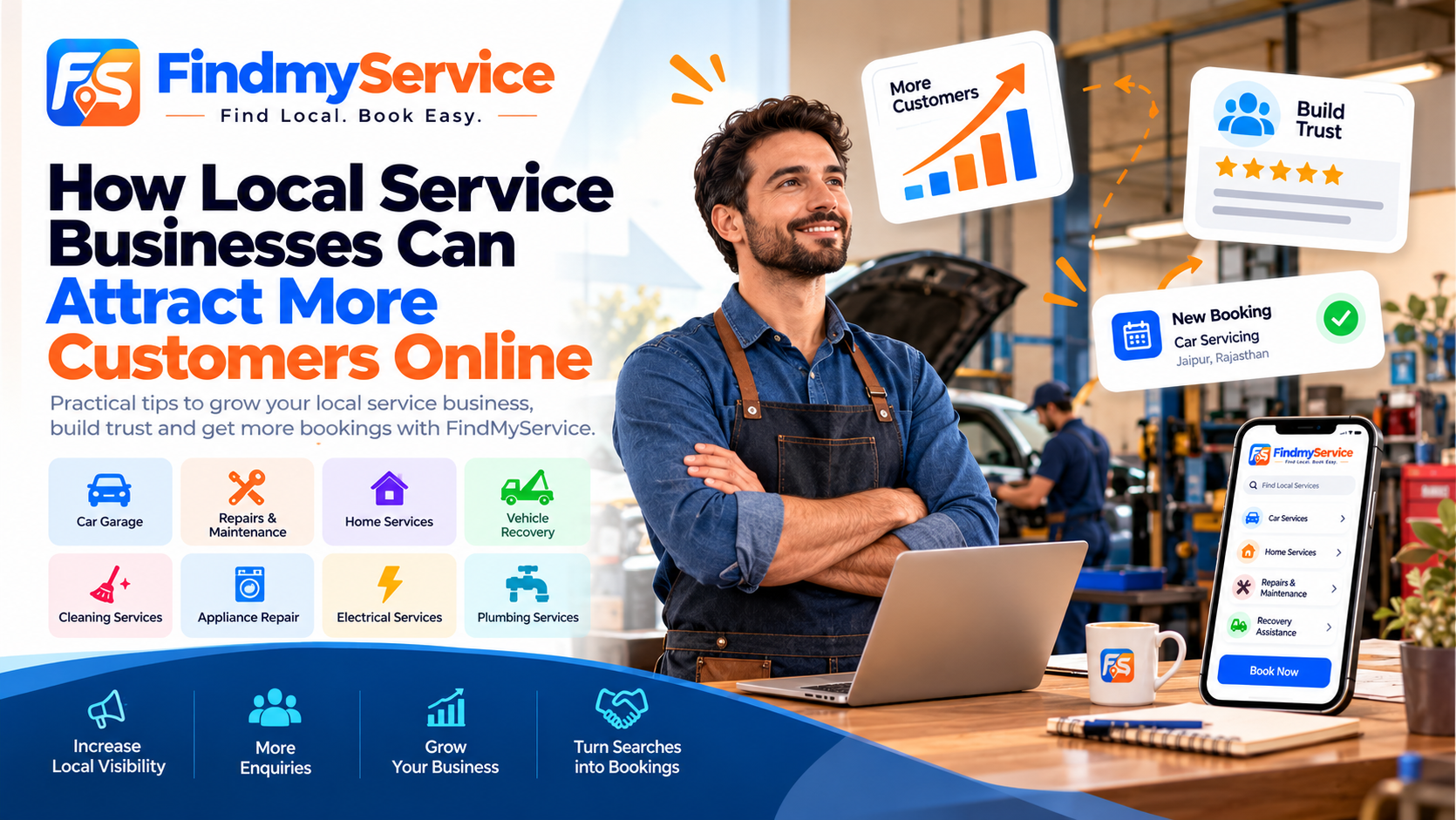
Running a local service business requires more than delivering good work. Whether you own a car garage, operate a plumbing business, provide electrical repairs, manage a cleaning service, or offer vehicle recovery, attracting a steady stream of customers is essential for sustainable growth.
Traditionally, many local businesses relied on word-of-mouth recommendations, printed advertisements, and customers passing by their premises. These methods can still be valuable, but customer behaviour has changed. Today, people frequently search online when they need a service, compare available providers, read customer reviews, and contact businesses before making a decision.
This creates an important opportunity for local service providers. By building a strong online presence and making it easier for potential customers to discover their services, small businesses can reach more people in their local area.
In this guide, we explore practical ways local service businesses can attract more customers online, build trust, and turn online interest into real enquiries and bookings.
Why Online Visibility Matters for Local Service Businesses
Imagine someone searching for a reliable car garage, an emergency plumber, or a professional electrician near their home. They may compare several businesses before deciding whom to contact.
If your business does not appear in relevant searches or provide enough information to build confidence, potential customers may choose a competitor instead.
A strong online presence helps your business:
Reach people actively looking for your services.
Appear in relevant local searches.
Showcase your services, experience, and previous work.
Build credibility through genuine customer reviews.
Make it easier for customers to contact you.
Generate enquiries beyond existing referrals.
Develop relationships with customers who may return in the future.
Online marketing does not guarantee a particular number of enquiries or sales. However, a consistent and well-planned approach can improve your opportunities to reach the right audience.
1. Create a Professional Website for Your Business
Your website can serve as the central place where potential customers learn about your business and decide whether to contact you.
A professional website does not need to be complicated. It should clearly explain what you offer, where you operate, and how customers can request your services.
Include the essential information
Make sure your website contains:
Your business name and contact details.
A clear description of your services.
The locations or areas you serve.
Your business hours and availability.
Photos of your premises, team, equipment, or completed work.
Customer testimonials, where genuine and authorised.
A clear way to call, message, request a quote, or book.
For example, a garage should explain whether it offers routine servicing, brake repairs, diagnostics, battery replacement, or other automotive services. A plumbing business should identify the types of plumbing work it handles.
Specific information helps customers understand whether your business is suitable for their needs.
Make your website mobile-friendly
Many people search for local services using smartphones, particularly when they need urgent assistance.
Your website should load efficiently, display correctly on smaller screens, and make important contact information easy to find.
Avoid hiding your phone number or enquiry form behind unnecessary steps. The easier it is for customers to understand your offering and contact you, the less friction they encounter.
2. Improve Your Local SEO
Local search engine optimisation, commonly called local SEO, helps businesses improve their visibility in searches related to their services and geographic area.
For example, potential customers may search for phrases such as:
Car garage near me.
Plumber in Manchester.
Electrician near my location.
Home cleaning services in my area.
Vehicle recovery service nearby.
You can improve your local SEO by clearly communicating your services and locations across your online presence.
Use relevant local keywords
Include your main services and genuine service areas naturally in your website content.
For example, a business serving Birmingham could create a page explaining its car servicing options in Birmingham, provided that it genuinely serves that area.
Avoid adding long lists of unrelated locations or repeating the same keyword excessively. The content should help customers rather than simply repeat search phrases.
Create useful service pages
If your business offers several services, give each important service its own informative page where appropriate.
A garage might have separate pages for vehicle servicing, brake repairs, diagnostics, and tyre services. A home maintenance company might create pages for plumbing, electrical work, and appliance repairs.
Each page should explain what the service includes, who may need it, and how customers can enquire.
Keep business information consistent
Use consistent business details across your website and online listings. Differences in names, phone numbers, or addresses can confuse potential customers.
Local SEO is a long-term effort, so focus on accurate information, useful content, and a good customer experience rather than expecting immediate results.
3. Set Up and Maintain Your Google Business Profile
For eligible businesses that serve local customers, a Google Business Profile can help people discover important information through Google Search and Maps.
A complete and accurate profile can make it easier for potential customers to find your location, understand your services, check business hours, and contact you.
To improve your profile:
Use your real business name.
Select the most relevant business category.
Add accurate contact information and opening hours.
Describe your services clearly.
Upload genuine, high-quality photos.
Keep special hours and service information updated.
Respond professionally to customer reviews.
If you travel to customers rather than serving them at a public business location, review Google's guidelines for service-area businesses and configure your profile accordingly.
Avoid creating misleading listings or claiming locations where your business does not genuinely operate. Accurate information supports trust and helps customers find the right service.
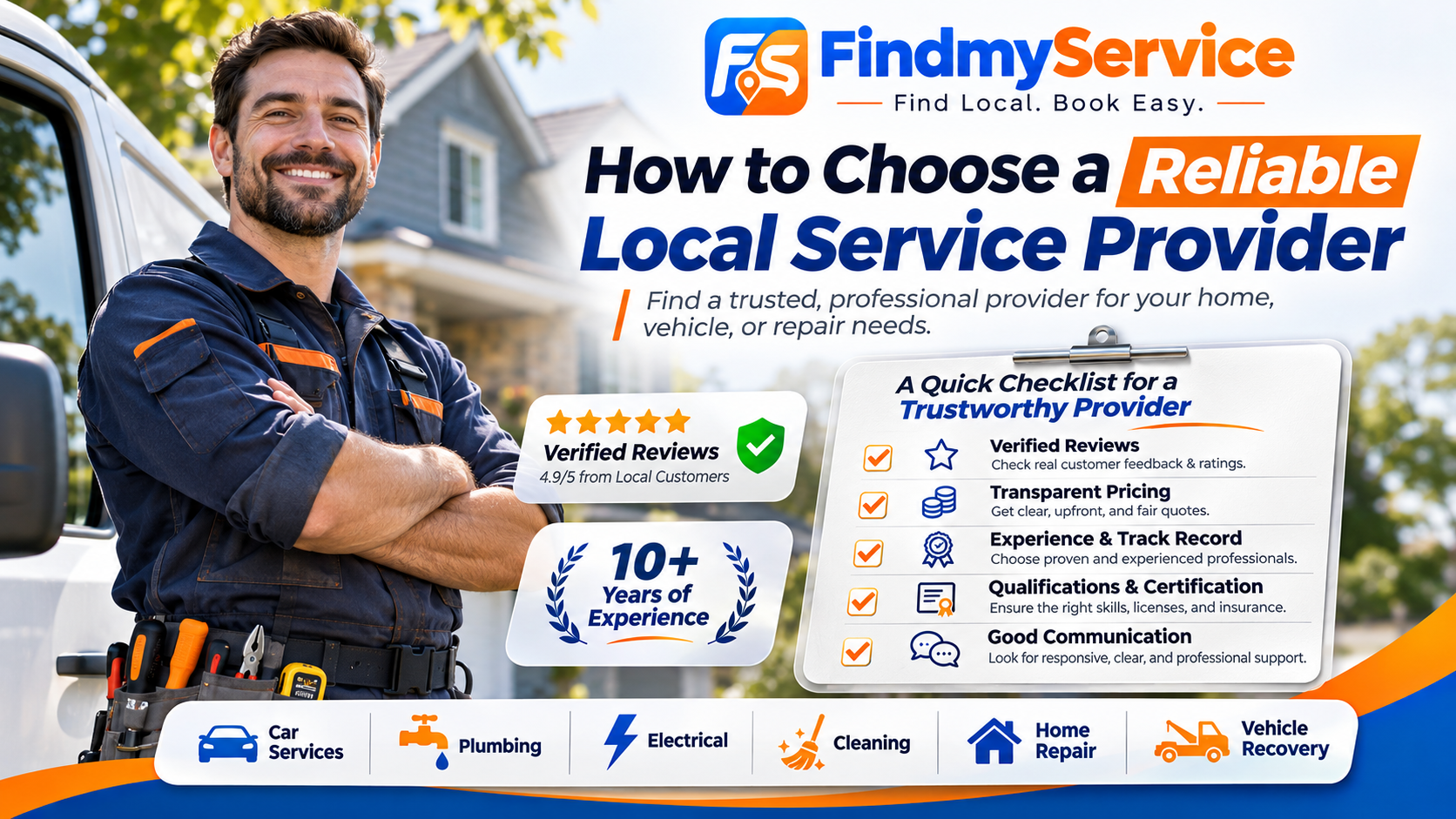
4. Encourage Genuine Customer Reviews
Customer reviews can influence how potential customers evaluate a local service business.
When people are choosing between several garages, electricians, or home repair professionals, they often want reassurance that others have had positive experiences.
A simple way to encourage feedback is to ask satisfied customers to leave an honest review after the service is completed.
You can make the process easier by sharing the appropriate review link through a follow-up message, email, or receipt.
How to manage reviews effectively
Respond to positive reviews. Thank customers for their feedback and acknowledge the service they received.
Handle negative feedback professionally. Respond calmly, avoid sharing private information, and offer an appropriate way to resolve the issue.
Look for recurring feedback. Reviews can highlight strengths and reveal areas where your business could improve.
Never purchase fake reviews. Artificial feedback can damage credibility and violate platform policies.
Trust develops through real customer experiences, not simply through a high star rating. Use reviews to improve service quality as well as your online reputation.
5. Use Social Media to Showcase Your Work
Social media can help local service businesses remain visible, demonstrate their expertise, and build relationships with potential customers.
You do not need to publish on every platform. Choose the channels your target audience uses and focus on creating useful, relevant content consistently.
For example, a garage could share vehicle maintenance tips, while a home repair professional could explain common household problems and how to recognise when professional assistance is needed.
Content ideas for local service businesses
Before-and-after photos of completed work, with customer permission.
Short educational videos answering common questions.
Seasonal maintenance reminders.
Explanations of your services and pricing process.
Introductions to your team and work environment.
Genuine customer testimonials shared with permission.
Answers to frequently asked customer questions.
Your posts should provide value rather than consist entirely of promotional messages.
Include your service area and a clear next step when appropriate, such as visiting your website, calling your business, or requesting a quote.
6. List Your Business on Relevant Local Directories and Platforms
People do not discover businesses through Google alone. They may also use industry directories, local business websites, community groups, and online service platforms.
Having an accurate presence on relevant platforms can create additional opportunities for customers to discover your business.
When evaluating a directory or marketplace, consider:
Whether it attracts your target customers.
Whether it covers your actual service area.
Whether customers can understand your services and contact you.
Whether the platform has clear listing and enquiry terms.
Whether paid listings or lead-generation fees apply.
Whether the platform provides useful ways to present your business.
Do not assume that every directory will generate quality leads. Start with relevant platforms, measure the enquiries you receive, and invest more time in channels that prove useful.
Explore local service discovery with FindMyService
VANIZ FindMyService aims to make local service discovery easier by connecting the idea of finding local professionals with a more organised online experience.
For service providers, relevant local platforms may offer another route for presenting their services to potential customers. The value depends on the platform's current features, audience, coverage, and listing arrangements.
Explore VANIZ FindMyService to learn more about the platform and its approach to local service discovery.
7. Make It Easy for Customers to Contact You
Even if potential customers discover your business online, complicated contact processes can cause them to leave without making an enquiry.
Make sure your contact options are clear and easy to use.
Depending on how your business operates, you may offer:
A phone number that customers can call.
A WhatsApp or messaging contact.
A short enquiry form.
A request-a-quote option.
An online booking process.
An email address for detailed enquiries.
Explain what information customers should provide when contacting you. For example, a vehicle recovery business may need the vehicle's location and condition, while a home repair professional may need a description of the problem and the property's general location.
Respond to enquiries promptly when possible, and give customers realistic expectations about availability.
If you cannot answer immediately, consider setting an appropriate response message so people know when they can expect to hear from you.
8. Publish Helpful Blog Content to Attract Search Traffic
Blogging is a useful way to answer questions potential customers are already asking online.
Instead of publishing only advertisements for your services, create content that helps people understand problems, compare solutions, and make better decisions.
For a local service business, relevant blog topics might include:
How to recognise common car problems.
When to call a professional plumber.
What to check before hiring an electrician.
How much a particular repair may cost.
How to prepare for a home maintenance appointment.
Questions to ask before choosing a vehicle recovery service.
Useful articles can support your SEO strategy, demonstrate your knowledge, and introduce readers to relevant services.
Follow basic SEO practices
For each article:
Choose one primary search topic.
Write a clear and descriptive title.
Use relevant headings to organise the information.
Answer the reader's main question early.
Add helpful internal links to related pages.
Use descriptive image alt text where appropriate.
Include a natural call to action.
Avoid publishing thin, repetitive articles just to target more keywords. A smaller collection of useful, accurate articles can provide a better experience than a large volume of low-quality content.
9. Use Paid Advertising Carefully
Paid advertising can help businesses reach potential customers more quickly than relying on organic search alone. However, results depend on the service, location, competition, budget, and quality of the enquiry process.
Google Ads may help reach people searching for a specific service. Social media advertising can help introduce a business to people in selected locations or audiences.
Before spending money, define your objective.
For example, you may want to generate phone calls for roadside assistance, enquiries for plumbing work, or quote requests for vehicle servicing.
Start with a focused campaign
A practical starting process is to:
Select one service and a realistic service area.
Define the action you want customers to take.
Create a clear landing page or contact destination.
Set a manageable test budget.
Track enquiries and the quality of leads.
Review costs and adjust the campaign based on results.
Do not judge an advertising campaign only by clicks or impressions. Measure whether it produces relevant enquiries and, where possible, profitable completed jobs.
Make sure the advertised service, price claims, and availability are accurate. Avoid promising immediate service unless you can genuinely provide it.
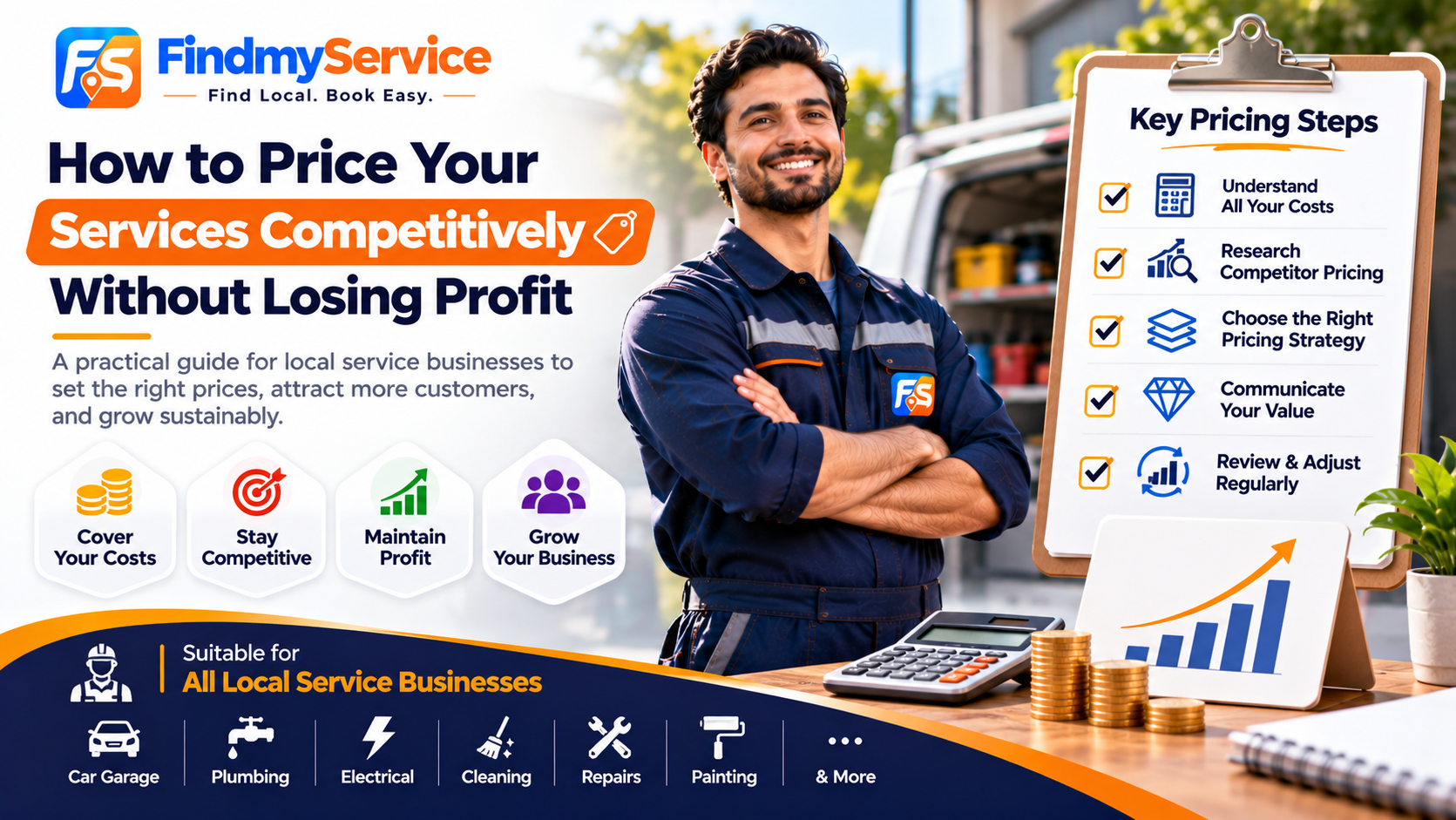
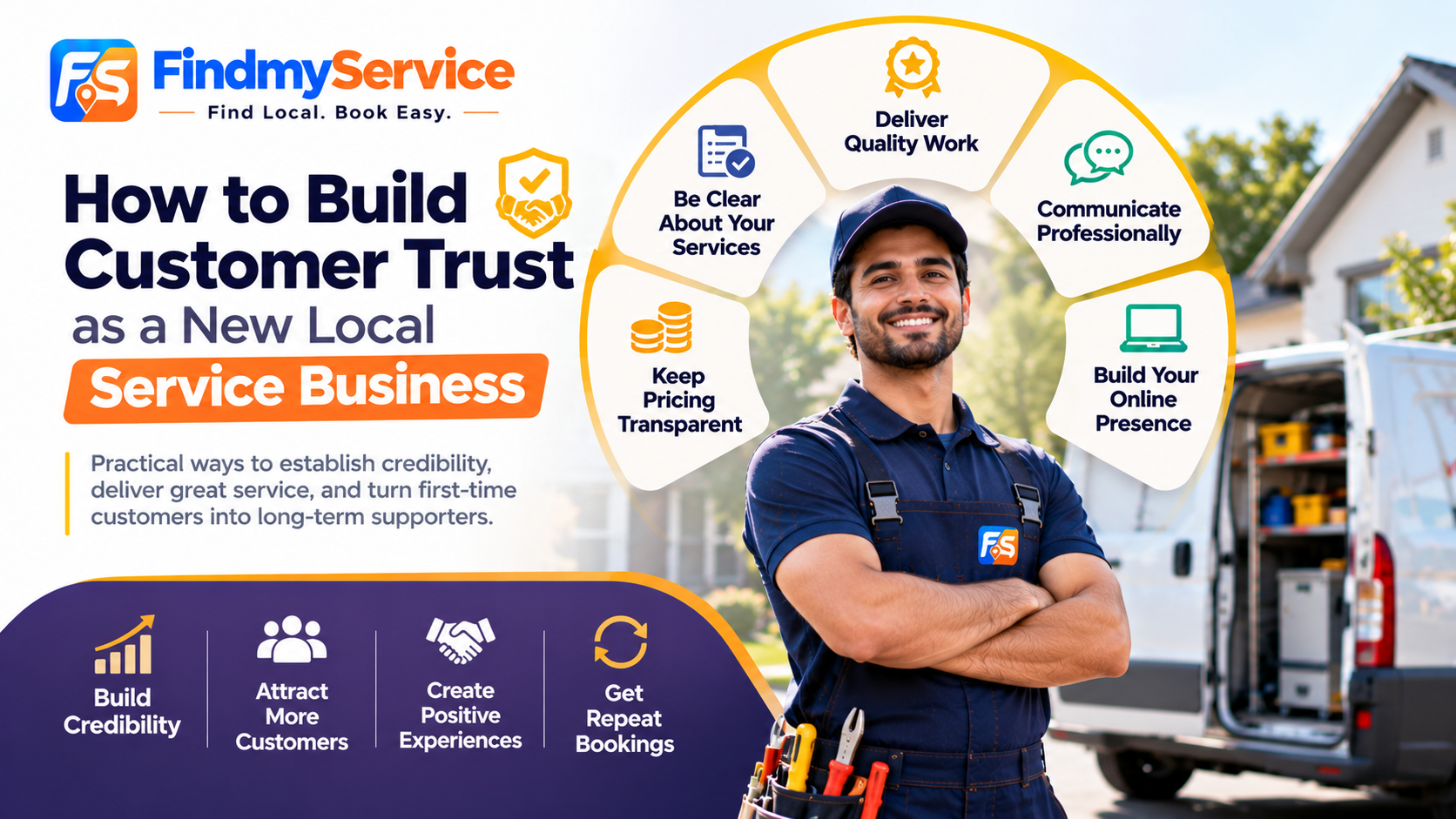
10. Build Trust Through Clear Pricing and Professional Communication
Marketing can help customers discover your business, but the experience that follows often determines whether they decide to proceed.
People want to understand what they are paying for, when the service can be completed, and what happens if the situation changes.
You can build confidence by:
Explaining what your quoted price includes.
Identifying potential additional charges.
Providing realistic time estimates.
Communicating delays or changes promptly.
Confirming important details in writing.
Explaining applicable warranties or service guarantees.
Following up appropriately after the job.
Some services cannot be priced accurately until an inspection is complete. In those cases, explain the diagnostic process, initial charges, and how the customer will approve further work.
Professional communication can help distinguish your business from competitors who provide limited information or unclear estimates.
11. Follow Up With Existing Customers
Attracting new customers is important, but maintaining relationships with existing customers can also support long-term growth.
Depending on the service and customer preferences, you might send a follow-up message after completing a job, share useful maintenance reminders, or notify customers about relevant services.
For example, a garage may remind a customer about a future maintenance check when appropriate. A home maintenance business may provide seasonal advice related to work previously completed.
Effective follow-up should be useful rather than intrusive.
Always respect privacy, applicable marketing and data protection rules, and any request to stop receiving promotional messages. Do not assume that a customer who booked once has agreed to receive ongoing marketing.
12. Measure What Is Working and Improve Over Time
Online marketing is more effective when you understand which activities produce meaningful results.
Track a few basic indicators, such as:
Website visits from relevant locations.
Search impressions and clicks.
Phone calls and enquiry-form submissions.
Leads generated from each marketing channel.
Quotes requested and jobs completed.
Customer feedback and repeat bookings.
Advertising cost per qualified enquiry.
Tools such as Google Search Console can help you understand how people find your website through Google Search. Website analytics and advertising reports can provide additional insight when configured correctly.
Review your results regularly. If a blog attracts relevant visitors, improve it and add useful related content. If an advertising channel produces many irrelevant enquiries, review your targeting and messaging before increasing the budget.
You do not need an expensive marketing system to begin. A simple record of enquiries, sources, and completed jobs can provide a useful starting point.
A Simple Online Marketing Plan for Local Service Businesses
If you are unsure where to start, focus on the fundamentals before adding more channels.
Week 1: Establish your online presence. Update your website, business details, service descriptions, contact options, and eligible local business listings.
Week 2: Build credibility. Request honest feedback from customers, respond to existing reviews, and add genuine photos of your work.
Week 3: Publish helpful content. Create one useful blog post or several short social media posts that answer common customer questions.
Week 4: Review and improve. Check your enquiries, website traffic, search visibility, and customer feedback. Identify what needs improvement and plan the next month's activities.
This is a suggested starting plan rather than a guarantee of results. Consistency, service quality, competition, and local demand all influence performance.
Final Thoughts
Attracting more customers online does not require a complicated marketing strategy. Local service businesses can begin by making their services easy to discover, providing accurate business information, encouraging genuine reviews, and making it simple for customers to enquire.
A professional website, local SEO, useful content, relevant online listings, and consistent communication can work together to improve visibility and build trust.
Paid advertising and service marketplaces may provide additional opportunities, but each channel should be evaluated based on its relevance, cost, and ability to generate suitable customers.
Most importantly, online visibility must be supported by a good customer experience. Clear pricing, reliable communication, and quality work help turn initial enquiries into satisfied customers and recommendations.
Ready to explore a more connected approach to local service discovery? Visit VANIZ FindMyService to learn more about the platform and how it aims to help people discover local services.