Finding a reliable local service provider has traditionally involved asking friends and family for recommendations, searching through directories, checking advertisements, or making several phone calls. Whether someone needed a car mechanic, plumber, electrician, cleaning professional, or vehicle recovery service, finding the right person could take considerable time and effort.
Today, digital technology is changing this experience.
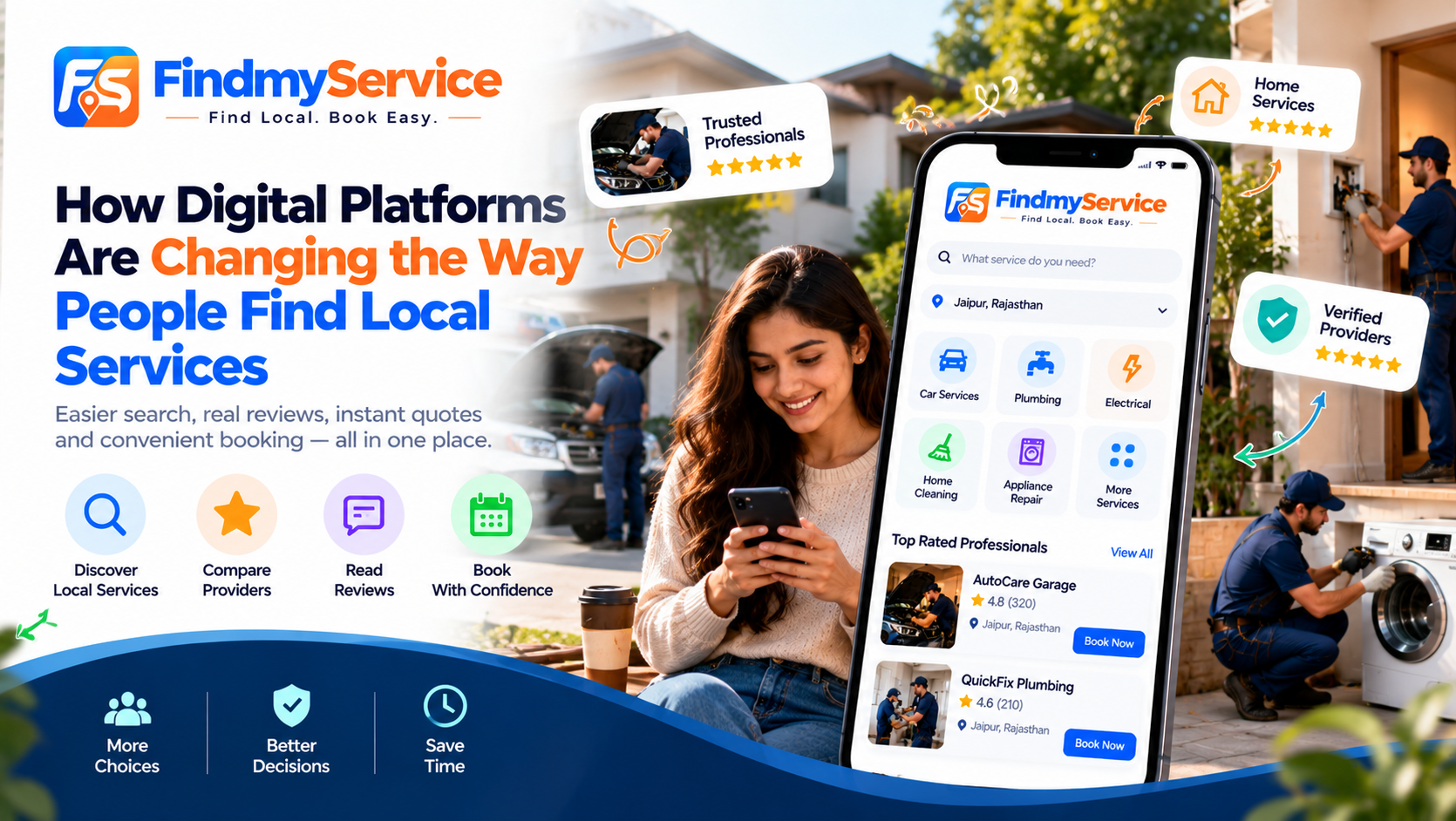
Digital platforms are making it easier for people to discover local businesses, compare service providers, read customer reviews, request quotes, and explore booking options from one place. Instead of relying entirely on traditional methods, customers can use online platforms to make more informed decisions.
This shift is transforming how customers find local services and how service businesses connect with potential customers.
In this article, we explore how digital platforms are changing the local services industry, the benefits they offer to customers and businesses, and what this means for the future.
1. The Traditional Way of Finding Local Services
Before online service platforms became common, finding a local professional often required several steps.
Customers typically depended on:
Recommendations from friends, relatives, and neighbours
Newspaper advertisements and printed directories
Local notice boards and business listings
Visiting businesses in person
Calling multiple providers to ask about services and prices
Although these methods could be useful, they also had limitations.
Customers might struggle to find enough providers to compare. Information about pricing, availability, qualifications, and customer experiences was not always easy to access. In urgent situations, such as a vehicle breakdown or an unexpected plumbing problem, finding a suitable professional could become even more stressful.
Digital platforms are helping address many of these challenges by bringing useful information and service discovery tools online.
2. Easier Discovery of Local Service Providers
One of the biggest changes introduced by digital platforms is the ability to find nearby service providers through online searches.
Customers can search for services based on their needs and location. For example, someone looking for a garage can search for car repair services in their area, while a homeowner can look for nearby plumbers, electricians, cleaners, or appliance repair professionals.
Many platforms also organise providers into categories, making it easier to explore relevant services without searching through unrelated businesses.
This improves convenience because customers can discover multiple options without travelling from one business to another.
For local businesses, online visibility creates another opportunity to reach people who are actively searching for the services they offer.
3. Customer Reviews Help People Make Better Decisions
Choosing a service provider involves more than finding someone who offers the required service. Customers also want to know whether that provider is reliable and delivers a satisfactory experience.
Online reviews and ratings have become important parts of this decision-making process.
Before contacting a business, customers may look at:
Overall customer ratings
Written feedback from previous customers
Comments about service quality
Experiences with pricing and communication
Feedback about punctuality and professionalism
Genuine customer feedback can help people understand what to expect before making a decision.
However, customers should not rely on ratings alone. It is important to read individual reviews, consider how recent they are, and look for consistent feedback across different experiences.
For service providers, positive and authentic reviews can help build credibility and encourage new customers to consider their business.
4. Comparing Multiple Providers Becomes More Convenient
In the traditional approach, customers often had to contact several businesses individually to understand their services and pricing.
Digital platforms can make this process more convenient by presenting information from multiple providers in one place.
Depending on the platform, customers may be able to compare:
Services offered
Customer ratings and reviews
Business information and experience
Location and service coverage
Available pricing information
Estimated turnaround times
Booking or enquiry options
This gives customers a clearer picture of their choices.
For example, someone who needs vehicle repairs can explore different garages, check the services they provide, and consider customer feedback before deciding whom to contact.
Comparing providers does not always mean choosing the cheapest option. Service quality, experience, communication, convenience, and transparency are also important factors.
5. More Convenient Enquiries and Booking Options
Digital platforms are also changing how customers contact service providers.
Instead of relying only on phone calls or visiting a business, customers may be able to submit an online enquiry, request a quote, send a message, or use a booking feature.
These options can make the process more convenient for both sides.
Customers can communicate their requirements more clearly, while businesses can receive structured enquiries and understand what a potential customer needs.
For example:
A homeowner can describe a plumbing issue before contacting a professional.
A vehicle owner can explain a car problem when enquiring with a garage.
Someone who needs recovery assistance can look for relevant providers in their area.
A customer can check available appointment options where online booking is supported.
The exact options depend on the platform and the services offered by each provider, but the overall goal is to reduce unnecessary steps between discovering a service and contacting the right professional.
6. Greater Access to Information and Pricing
Uncertainty about costs is one of the common challenges customers face when arranging local services.
A customer may know what needs repairing but have little idea about the likely price. They may also be unsure whether additional labour, materials, travel, or emergency charges will apply.
Digital platforms can help improve access to pricing information by allowing businesses to display service details, indicative prices, or quote options where available.
Customers can use this information to ask better questions and understand what is included before agreeing to a service.
However, not every repair or service has a fixed price. The final cost may depend on the condition of the property or vehicle, the complexity of the work, required materials, and other factors.
Customers should always confirm the scope of work, additional charges, and final price directly with the provider before authorising the job.
7. Helping Small and Local Businesses Reach More Customers
Digital platforms are not only useful for customers. They also create opportunities for local service businesses.
Traditionally, many small businesses depended heavily on word-of-mouth recommendations, physical locations, and local advertising. Reaching customers beyond their immediate network could be difficult.
An online presence can help businesses become discoverable by people searching for specific services in their area.
A well-maintained business profile may include:
Business name and contact information
Service categories and descriptions
Operating hours and service locations
Photos of completed work
Customer reviews and ratings
Enquiry or booking information
These details help potential customers understand what a business offers before making contact.
For smaller providers, digital platforms can provide an additional channel for visibility without requiring them to build and manage a complex website or invest heavily in advertising.
Success still depends on service quality, accurate information, timely communication, and maintaining customer trust.
8. Better Communication Between Customers and Providers
Clear communication is essential when arranging any local service.
A customer may need to explain a problem, share photographs, discuss availability, understand pricing, or confirm the expected completion time.
Digital communication tools can make these interactions easier to manage.
Depending on the platform, customers and providers may be able to communicate through online forms, messaging features, email, or other contact options.
Structured enquiries can also help businesses collect important details before responding.
For example, a customer requesting an appliance repair can provide the appliance type, describe the issue, and mention their location. This gives the service provider a better starting point for understanding the request.
Good communication helps reduce misunderstandings and creates a smoother experience from the first enquiry to the completion of the service.
9. Digital Platforms Support More Informed and Convenient Decisions
The availability of online information gives customers more opportunities to research their options before choosing a provider.
Instead of making a decision based on a single recommendation or advertisement, customers can consider several factors together.
These may include:
Whether the provider offers the required service
How conveniently the provider can be reached
What previous customers have said
Whether pricing information is available
How clearly the business communicates
Whether the provider can meet the required schedule
This does not remove every risk associated with hiring a professional. Customers should still check important qualifications, insurance, accreditations, and other relevant credentials where appropriate.
Digital platforms are most useful when customers combine the information available online with sensible checks and direct communication.
10. The Future of Finding Local Services
The local services industry is likely to become increasingly connected through digital technology.
As customer expectations evolve, platforms may introduce more useful tools to simplify the process of discovering and arranging services.
Some developments shaping this direction include:
Smarter service searches: Search tools may become better at understanding everyday descriptions of problems and connecting customers with relevant service categories.
Location-based discovery: More convenient location features can help customers explore businesses and professionals serving a particular area.
Improved digital profiles: Businesses may use richer profiles, photographs, service information, credentials, and customer feedback to explain their offerings.
More connected booking journeys: Enquiries, appointments, messaging, payments, and service updates may become part of a more connected customer experience.
Personalised recommendations: Technology may help customers discover relevant services based on their requirements, location, and previous interactions.
These developments have the potential to make local service discovery more convenient, but trust, transparency, data protection, and service quality will remain essential.
11. How FindMyService Supports the Changing Local Services Experience
As more customers turn to the internet to find local professionals, platforms that bring service discovery and useful business information together can play an important role.
FindMyService, from VANIZ Group, is designed around the idea of making it easier for people to discover and explore local service providers.
The platform focuses on connecting customers with service businesses across categories such as vehicle care, garages, home services, recovery, and other local professional services.
The goal is to make the search process more straightforward by helping customers explore relevant providers and access useful information when deciding whom to contact.
For customers, this means having another convenient way to discover local service options. For service businesses, it offers an opportunity to improve their online visibility and connect with people looking for relevant services.
As the platform develops, its wider purpose is to support a more accessible and organised local services experience.
Conclusion
Digital platforms are changing the way people find local services by making discovery, comparison, communication, and enquiries more convenient.
Customers can explore providers, read reviews, consider available information, and make more informed decisions. At the same time, local businesses have new opportunities to improve their online visibility and connect with potential customers.
Technology does not replace the importance of skilled professionals, reliable service, or personal trust. Instead, it provides better ways for customers and businesses to find each other.
As digital adoption continues to grow, online service platforms will become an increasingly important part of how people discover and arrange everyday services.
FindMyService by VANIZ Group aims to make that experience simpler by helping customers discover local service providers and helping businesses become easier to find.