Running a small service business requires more than delivering good-quality work. Whether you operate a car garage, plumbing service, electrical business, cleaning company, repair service, or another local business, attracting new customers is an important part of long-term growth.
In the past, many small businesses depended mainly on word-of-mouth recommendations, local advertisements, shop signs, and repeat customers. These methods are still valuable, but customer behaviour has changed. Today, people often search online before choosing a service provider.
They may look for a nearby professional, compare businesses, read customer reviews, check contact details, or visit a website before making a decision.
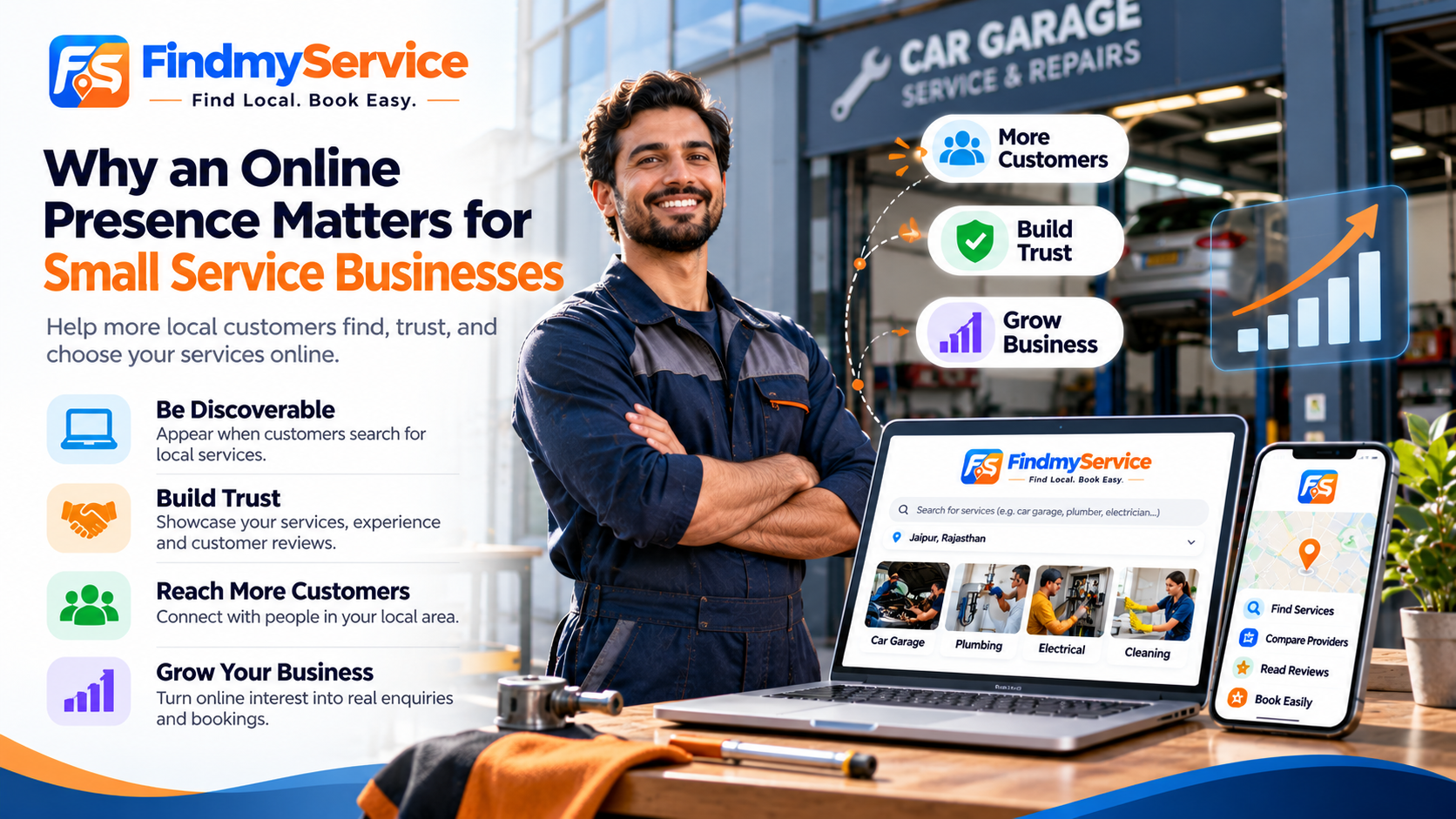
This is why having a strong online presence has become increasingly important for small service businesses. It helps potential customers discover your business, understand what you offer, and feel more confident about contacting you.
In this article, we explore why online visibility matters, what a small service business should establish online, and how digital platforms can support business growth.
1. Customers Search Online Before Choosing a Service
When people need a local service, one of their first steps is often to search online.
Someone whose car has broken down may search for a nearby garage or vehicle recovery service. A homeowner dealing with a leaking pipe may look for a local plumber. Someone planning a home renovation may compare electricians, painters, or other professionals.
If your business does not have an online presence, potential customers may not discover it during these searches.
An online presence gives people a way to find your business when they are actively looking for the services you provide.
It can include:
A professional business website
A Google Business Profile
Social media business pages
Listings on relevant service directories
Profiles on local services marketplaces
You do not need to use every platform immediately. Start with the channels that are most relevant to your customers and business.
2. Build Trust Before Customers Contact You
Customers want to feel confident before hiring a service provider, especially when the work involves their home, vehicle, or personal property.
A professional online presence can help establish that confidence.
When people find your business online, they should be able to understand:
What services you provide
Where your business operates
How to contact you
What experience or qualifications you have
What previous customers say about your work
Examples of completed projects, where appropriate
A complete and regularly updated business profile gives potential customers useful information before they make contact.
For example, a garage that displays its repair services, opening hours, location, photographs, and genuine customer feedback may make it easier for vehicle owners to understand whether it is suitable for their needs.
Trust is built through consistent service and honest communication, but clear online information helps create a positive first impression.
3. Reach More Local Customers
A small service business often operates within a particular town, city, or surrounding area. Reaching people in that local market is essential.
Online platforms can help businesses become visible to customers searching for services in their location.
Local search optimisation, commonly known as local SEO, helps improve the chances of a business appearing in relevant local search results.
Some useful steps include:
Creating and maintaining a Google Business Profile
Using accurate business names, addresses, and contact details
Clearly describing services on your website
Adding relevant service-area information
Encouraging genuine customer reviews
Keeping business hours updated
Creating useful content related to local customer needs
For example, a plumber serving a particular area should clearly mention the locations covered and the types of plumbing work offered.
The goal is to make it easier for the right customers to find your business when they need your services.
4. Your Website Works as a Digital Business Card
A website gives your business a central place where potential customers can learn about your services.
Unlike a social media profile alone, a website allows you to organise information in a way that suits your business and customer needs.
A useful small-business website should include:
Homepage: A clear introduction explaining what your business does and who it serves.
Services page: Details of the services available, including the types of jobs you handle.
About page: Information about your experience, background, team, and approach to work.
Contact page: Phone number, email address, location, opening hours, and an enquiry form.
Reviews or testimonials: Genuine feedback from customers, published with appropriate permission.
Gallery or portfolio: Photographs or examples of completed work, where relevant.
A website does not need to be complicated or expensive to be useful. A simple, mobile-friendly website with clear information and easy contact options can provide a strong foundation.
5. Customer Reviews Influence Buying Decisions
Online reviews are an important part of how customers evaluate local service businesses.
Before contacting a provider, people may check ratings and read feedback from previous customers to understand their experiences.
Reviews can help potential customers learn about:
Service quality
Professional behaviour
Communication
Punctuality
Pricing transparency
Customer satisfaction
For small businesses, genuine positive reviews can strengthen credibility and help build a good reputation.
However, collecting reviews should be handled honestly. Businesses should never purchase fake reviews or pressure customers to leave misleading feedback.
A better approach is to ask satisfied customers politely to share their genuine experiences. Responding professionally to negative feedback can also demonstrate that the business takes customer concerns seriously.
Over time, consistent and authentic customer feedback can become a valuable part of your online reputation.
6. Social Media Helps Customers Connect With Your Business
Social media provides another way for small service businesses to communicate with existing and potential customers.
Platforms such as Facebook, Instagram, and LinkedIn can help businesses share updates, demonstrate their work, and maintain visibility.
For example:
A garage can share vehicle maintenance tips and examples of completed repairs.
A cleaning business can show before-and-after photographs with customer permission.
A plumber can publish advice about common household plumbing problems.
An electrician can share safety information and explain different services.
Social media also allows businesses to respond to questions, share announcements, and communicate directly with customers.
You do not need to publish content every day. A consistent schedule with useful, relevant information is more valuable than frequent posts without a clear purpose.
Choose platforms where your target customers are most active and focus on providing information that helps them.
7. Compete More Effectively With Larger Businesses
Small businesses sometimes assume that building an online presence requires a large marketing budget. This is not necessarily true.
Many digital tools offer free or affordable ways to establish visibility, communicate with customers, and promote services.
A small local business can compete for attention by focusing on what makes it valuable:
Specialised services
Knowledge of the local area
Personal customer service
Flexible appointments
Clear communication
Genuine customer relationships
Strong reviews and recommendations
A large company may have more advertising resources, but a small business can still build trust through expertise, responsiveness, and a strong local reputation.
The important thing is to present your business professionally and make it easy for customers to understand why they should consider your services.
8. Generate More Enquiries and Business Opportunities
An effective online presence should do more than display business information. It should make it easy for interested customers to take the next step.
Depending on your business model, useful enquiry options may include:
Click-to-call phone numbers
WhatsApp contact links
Online enquiry forms
Email contact options
Appointment request forms
Online booking features
Quote request forms
For example, a customer searching for a vehicle repair service should be able to understand what the garage offers and quickly find a way to enquire.
Similarly, a homeowner looking for an electrician should not have to search through several pages to find basic contact information.
Make the next step clear. Use simple calls to action such as "Request a Quote", "Contact Us", or "Book an Appointment".
Remember that receiving an enquiry is only the beginning. Responding promptly, understanding the customer's requirements, and providing clear information are equally important.
9. Understand Your Customers Through Digital Insights
Digital tools can help small businesses understand how people discover and interact with their online presence.
Depending on the tools being used, business owners may be able to monitor:
How many people visit their website
Which pages receive the most attention
What search terms bring visitors
How many people click to call
Which social media posts receive engagement
How many enquiries come through online channels
These insights can help identify what is working and where improvements are needed.
For example, if many visitors view a particular service page but very few submit enquiries, the business may need to improve the page description, pricing information, contact options, or calls to action.
You do not need complex analytics software to get started. Even basic website and business-profile insights can provide useful information.
10. Avoid Common Online Presence Mistakes
Simply creating business profiles or launching a website does not guarantee more customers. Your online information needs to be accurate, useful, and maintained.
Here are some common mistakes small service businesses should avoid:
Incomplete business profiles: Missing contact details, service descriptions, or operating hours can make customers uncertain.
Outdated information: Incorrect phone numbers, old prices, and unavailable services can damage trust.
Ignoring customer reviews: Failing to respond to feedback can create a poor impression.
Poor mobile experience: Many customers search for local services using smartphones. Your website should be easy to read and navigate on smaller screens.
Unclear service descriptions: Customers should quickly understand what you offer and whether you can help with their requirements.
Inconsistent branding: Using different business names, contact details, or logos across platforms can confuse potential customers.
No clear contact option: Make sure visitors can easily call, message, request a quote, or enquire.
Regularly reviewing your online presence helps keep your business information reliable and professional.
11. How Local Services Marketplaces Can Help Small Businesses
Managing a website, social media pages, local listings, and customer enquiries can take time, especially for small service businesses with limited staff.
Local services marketplaces provide another way for businesses to improve their visibility.
These platforms are designed to help customers discover service providers and explore relevant options in one place.
Depending on the platform, businesses may be able to create profiles, list their services, display business information, receive enquiries, and connect with customers looking for specific services.
For customers, marketplaces can make it easier to explore local professionals. For service providers, they can offer an additional channel for reaching potential customers beyond their existing network.
FindMyService by VANIZ Group is designed to support this type of local service discovery. The platform focuses on helping customers find and explore service providers across categories such as garages, vehicle services, home services, recovery, and other local professional services.
It also aims to provide local businesses with another opportunity to improve their online visibility and connect with people searching for relevant services.
12. Practical Steps to Build Your Online Presence
If your small service business has limited online visibility, you do not need to change everything at once.
Start with a few practical steps:
Step 1: Create a professional business profile
Add your business name, contact information, service categories, operating hours, and service locations to relevant online directories and platforms.
Step 2: Build a simple website
Create a mobile-friendly website that explains your services and makes it easy for customers to contact you.
Step 3: Collect genuine customer reviews
Ask satisfied customers to share honest feedback about their experience.
Step 4: Share useful content
Publish practical tips, service updates, photographs of completed work, and answers to common customer questions.
Step 5: Keep information updated
Review your website, business profiles, contact details, and service descriptions regularly.
Step 6: Monitor enquiries
Track where new enquiries come from and which channels generate useful business opportunities.
Step 7: Improve gradually
Use customer feedback and digital insights to improve your website, communication, and marketing approach.
Consistency is more important than trying to establish a large online presence overnight.
Conclusion
An online presence is no longer just an optional marketing activity for small service businesses. It is an important way to help customers discover your services, learn about your business, check your reputation, and contact you.
A professional website, accurate business listings, genuine customer reviews, and useful social media content can all contribute to better online visibility.
You do not need a large marketing budget to begin. Start with clear business information, focus on the platforms your customers use, and maintain a consistent and professional approach.
As more people turn to digital channels to find local services, businesses that make themselves easy to discover and contact will be better positioned to build relationships and attract new opportunities.
FindMyService by VANIZ Group aims to make local service discovery more accessible by helping customers explore service providers and giving local businesses another opportunity to connect with potential customers online.